Showing posts with label heterosexual men. Show all posts

Wednesday, March 16, 2016

The Role of the Illusion in the Construction of Erotic Desire: Narratives from Heterosexual Men Who Have Occasional Sex with Transgender Women

Little is known about men's sexual desire for and erotic attraction to male-to-female transgender women. To better understand how erotic desire is constructed, this study examined the narratives of a sample of heterosexual men who had had an occasional sexual encounter with a transgender woman. 

Open-ended qualitative interviews were conducted with 16 heterosexual men who reported at least one sexual encounter with a transgender woman in the previous 12 months. Using principles of Grounded Theory, three themes emerged: 
  1. the erotic desire that transpired from a transgender woman's construction of her femininity, 
  2. the sexual act that dictated the specific navigation of a transgender woman's penis and 
  3. the sexual dissonance that resulted from being a heterosexually identified man having sex with a partner who had a penis. 
These themes reflected how the participants defined and negotiated their sexual encounters, both psychologically through their understanding of sex with a transgender woman with a penis, and physically through the navigation of specific sex acts. 

The role of the 'illusion' was central to the meaning and construction of erotic desire. These narratives provided another framework for continuing discourse on the complexity of erotic desire.

Purchase full article at:   http://goo.gl/ruljKP

  • 1 Friends Research Institute, Inc. , Los Angeles , USA.
  • 2 Integrated Substance Abuse Programs, Semel Institute for Neuroscience and Human Behavior , University of California at Los Angeles , California , USA.
  • 3 Department of Obstetrics, Gynecology and Reproductive Sciences; Bixby Center for Global Reproductive Health , University of California at San Francisco , San Francisco , USA.
  • 4 Department of Philosophy , California State University , Los Angeles , USA. 
  •  2016 Mar 11:1-13. 


Sunday, March 6, 2016

The Rapid HIV Test in Spanish Pharmacies: A Novel Program to Reach Heterosexual Men?

OBJECTIVES:
Spain has been a pioneer in the implementation of rapid HIV testing programmes in pharmacies to increase access to testing. However, no formal evaluation of the effectiveness of these programmes has been carried out to date. Our aim was to evaluate the ability of a novel in-pharmacy rapid HIV testing programme to promote diagnosis and reach vulnerable populations.

METHODS:
Between 2011 and 2012, 2168 people underwent testing in 16 urban pharmacies in 10 cities of a Spanish region with a low prevalence of HIV infection. The main outcomes of the programme were compared with those of the regional surveillance system for new HIV diagnoses (RHSS-CyL).

RESULTS:
Overall, 52.8% of those tested were heterosexual men, 15.8% were men who have sex with men (MSM) and 25.3% were women. Nine per cent were immigrants and 41.9% were < 30 years old. In total, 59.5% of the heterosexual men, 44.6% of the MSM and 65.3% of the women were previously untested. There were 23 positive results, representing 6% of all new regional diagnoses in 2011. The global prevalence was 1.1% (95% confidence interval 0.6-1.5%) and the prevalence in MSM was 3.8%. Of the reactive results, 60.9% were in MSM, 34.8% in heterosexual men and only 4.3% in women, vs. 35.4%, 37.5% and 15.0%, respectively, reported by the RHSS-CyL. The mean age of those testing positive was 32.7 years vs. 38.7 years in the RHSS-CyL. Fifty per cent of MSM and 75% of heterosexual men testing positive were previously untested.

CONCLUSIONS:
In Spain, this is the first programme not targeted at the most at-risk populations, and has been shown to be effective in reaching and diagnosing heterosexual men, who are the group most affected by delayed diagnoses. Heterosexual men accounted for over half of those tested and a third of those diagnosed, and most of them were previously untested. Young and previously untested MSM also greatly benefitted from the programme.

Purchase full article at:   http://goo.gl/zxwJFT

  • 1National Epidemiology Centre, Carlos III Health Institute, Madrid, Spain.
  • 2CIBER of Epidemiology and Public Health (CIBERESP), Madrid, Spain.
  • 3Epidemiological Surveillance Service, Public Health Directorate, Regional Ministry of Health of Castilla and León, Valladolid, Spain.
  • 4National School of Health, Carlos III Health Institute, Madrid, Spain. 
  •  2015 Jul;16(6):362-9. doi: 10.1111/hiv.12224. Epub 2015 Feb 17.


Friday, January 22, 2016

From MSM to Heteroflexibilities: Non-Exclusive Straight Male Identities & Their Implications for HIV Prevention & Health Promotion

This article examines the logics of self-identification among men who have same-sex desires and behaviours and consider themselves to be straight. We draw from interviews conducted in the USA with 100 straight-identified men who have same-sex desires and 40 partners of such men. 

Our data allow us to reject two misconceptions. One is the idea that these men are actually gay or bisexual but refuse to accept those identities. We argue instead that these men see themselves as straight and therefore it is important to understand what specifically they mean by that. 

The second misconception links straight-identified men who have same-sex desires and behaviours to the racialised discourse of the so-called down low (or 'DL') in the USA. While the DL typically is depicted as involving African American and Latino men, most of our participants are White. 

Moving beyond these misconceptions, we propose that health educators must acknowledge flexibilities in the definition of heterosexuality and use an expanded definition as a starting point to envision, together with these men, how to more effectively engage them in HIV prevention and health promotion.

Purchase full article at:   http://goo.gl/7j26De

By:  Carrillo H1, Hoffman A1.


Saturday, January 9, 2016

Masturbation and Pornography Use among Coupled Heterosexual Men with Decreased Sexual Desire: How Many Roles of Masturbation?

The relation between masturbation and sexual desire has not been systematically studied. The present study assessed the association between masturbation and pornography use and the predictors and correlates of frequent masturbation (several times a week or more often) among coupled heterosexual men who reported decreased sexual desire. 

Analyses were carried out on a subset of 596 men with decreased sexual desire (mean age = 40.2 years) who were recruited as part of a large online study on male sexual health in 3 European countries. 

A majority of the participants (67%) reported masturbating at least once a week. Among men who masturbated frequently, 70% used pornography at least once a week. A multivariate assessment showed that sexual boredom, frequent pornography use, and low relationship intimacy significantly increased the odds of reporting frequent masturbation among coupled men with decreased sexual desire. 

These findings point to a pattern of pornography-related masturbation that can be dissociated from partnered sexual desire and can fulfill diverse purposes. 

Clinical implications include the importance of exploring specific patterns of masturbation and pornography use in the evaluation of coupled men with decreased sexual desire.

Purchase full article at:   http://goo.gl/2QzV1u

a Department of Clinical Psychology, ISPA-University Institute, Lisbon, Portugal
b Department of Psychology, University of Oslo, Oslo, Norway
c Department of Sociology, University of Zagreb, Zagreb, Croatia


Wednesday, December 9, 2015

Interest in Babies Negatively Predicts Testosterone Responses to Sexual Visual Stimuli among Heterosexual Young Men

Men's testosterone may be an important physiological mechanism mediating motivational and behavioral aspects of the mating/parenting trade-off not only over time but also in terms of stable differences between mating-oriented and parenting-oriented individuals. 

In this study, we tested the hypothesis that self-reported interest in babies is inversely related to testosterone reactivity to cues of short-term mating among heterosexual young men. 

Among 100 participants, interest in babies was related to a slow life-history strategy, as assessed by the Mini-K questionnaire, and negatively related to testosterone responses to an erotic video. Interest in babies was not associated with baseline testosterone levels or with testosterone reactivity to nonsexual social stimuli. 

These results provide the first evidence that differential testosterone reactivity to sexual stimuli may be an important aspect of individual differences in life-history strategies among human males.

Purchase full article at:  http://goo.gl/5Hj495

  • 1Department of Psychology, Wayne State University.
  • 2Institute for Mind and Biology, The University of Chicago.
  • 3Institute for Mind and Biology, The University of Chicago dario@uchicago.edu. 


Sunday, November 22, 2015

A Latent Class Analysis of Heterosexual Young Men's Masculinities

Parallel bodies of research have described the diverse and complex ways that men understand and construct their masculine identities (often termed "masculinities") and, separately, how adherence to traditional notions of masculinity places men at risk for negative sexual and health outcomes. 

The goal of this analysis was to bring together these two streams of inquiry. Using data from a national, online sample of 555 heterosexually active young men, we employed latent class analysis (LCA) to detect patterns of masculine identities based on men's endorsement of behavioral and attitudinal indicators of "dominant" masculinity, including sexual attitudes and behaviors. LCA identified four conceptually distinct masculine identity profiles. 

Two groups, termed the Normative and Normative/Male Activities groups, respectively, constituted 88% of the sample and were characterized by low levels of adherence to attitudes, sexual scripts, and behaviors consistent with "dominant" masculinity, but differed in their levels of engagement in male-oriented activities (e.g., sports teams). 
  • Only eight percent of the sample comprised a masculinity profile consistent with "traditional" ideas about masculinity; this group was labeled Misogynistic because of high levels of sexual assault and violence toward female partners. 
  • The remaining four percent constituted a Sex-Focused group, characterized by high numbers of sexual partners, but relatively low endorsement of other indicators of traditional masculinity. 
Follow-up analyses showed a small number of differences across groups on sexual and substance use health indicators. Findings have implications for sexual and behavioral health interventions and suggest that very few young men embody or endorse rigidly traditional forms of masculinity.

Purchase full article at:   http://goo.gl/hyQTtA

  • 1Social Work Program, University of Washington, 1900 Commerce, Box 358425, Tacoma, WA, 98402, USA. ercasey@uw.edu.
  • 2School of Social Work, University of Washington, Seattle, WA, 98105, USA. 

Friday, November 13, 2015

A Matter of Sexual Confidence: Young Men's Non-Prescription Use of Viagra in Addis Ababa, Ethiopia

This paper examines the non-prescription use of the sexual enhancement drug Viagra by young men in Addis Ababa. Data was collected through repeated in-depth interviews with 14 Viagra users - heterosexual men between the ages of 21 and 35 - and focus-group discussions with 21 male and 22 female university students. 

Study participants turned to Viagra to impress lovers, as a 'support mechanism' when feeling weak or tired, to counteract the effects of chewing the stimulant plant khat and to satisfy what they perceived as a psychological 'addiction'. More generally, young men used Viagra to quell anxieties about what they perceived as women's growing expectations about their sexual performance - informed by changing gender relations and sexual expectations, constructions of masculinity that emphasise sexual prowess, and a misreading of women's sexual desires largely fuelled by the emergence of pornography as a new standard for sexual performance. 

While some men gained sexual confidence by using Viagra, others - particularly those who used Viagra regularly - paradoxically experienced feelings of loss of manhood.

Purchase full article at:  http://goo.gl/l4hB9L

By:  Both R1.
  • 1 Amsterdam Institute for Social Science Research , University of Amsterdam , Amsterdam , The Netherlands.


Thursday, November 12, 2015

Masculine Overcompensation in Gay Men

Masculine overcompensation is a phenomenon that occurs when a male exhibits hypermasculine characteristics in response to threats to his masculinity (Willer, Rogalin, Conlon, & Wojonowicz, 2013).  Heterosexual males have been found to respond to gender identity threats with higher levels of stereotypically masculine characteristics and increased antisocial behaviour, but it is not known whether gay men respond correspondingly when their masculinity is challenged.  Our study posed to determine the extent to which gay males exhibit masculine overcompensation previously seen in heterosexual males...


Via:  http://ht.ly/UAtjI  PDF Poster: http://goo.gl/dYRs1g


By: Brodie J. Lewis, Cassandra Hesse, Briana Cook, Kaylee Skoda, & Cory L. Pedersen of https://twitter.com/OrgasmRLab 


And: http://twitter.com/Prison_Health

Sunday, October 18, 2015

Does It Get Better? A Quasi-Cohort Analysis of Sexual Minority Wage Gaps

With few exceptions, it has been found that gay men earn less and lesbians earn more than their heterosexual counterparts. Most of the current literature has used single cross-sectional datasets to test possible sources of these wage differentials. 

This study adds to this literature by presenting a theoretical framework, grounded in gender theory, to explore: (a) whether sexual minority wage gaps have attenuated over the last decade, (b) whether wage gaps vary by age group, and (c) if wage gaps vary with duration in the labor market. 

Using Canadian census and survey data, this study finds:
  • no evidence that wage gaps have attenuated for gay men 
  • and only small reductions for lesbians and heterosexual women, relative to heterosexual men. 
  • Wage gaps are larger for younger gay men than for older gay men, which may suggest a "coming out penalty". 
  • The lesbian wage premium, vis-á-vis heterosexual women, does not appear at initial labor market entry; rather it develops with duration in the labour market.
Purchase full article at: http://goo.gl/ZLdDVV

By: Waite S1.
  • 1McGill University, Department of Sociology and Centre on Population Dynamics, Room 712, Leacock Building, 855 Sherbrooke Street West, Montréal, Quebec H3A 2T7, Canada. Electronic address: sean.waite@mail.mcgill.ca.
  

Tuesday, August 18, 2015

Defining the Content of an Online Sexual Health Intervention: The MenSS Website

Below:  MenSS homepage with carousel of personalised tailored content


Below:  Condoms: The Basics – skills in correct condom application


Below:  Condoms: Tailored for you – tailored feedback on selected barriers to condom use


Below:  STIs: Are you at risk? – infographics illustrating potential risks of STI


Below:  Reminders and plans feature


Below:  Flow diagram of data collection processes


The MenSS intervention is a website optimized for delivery via tablet computer within a clinic waiting room setting. Key targets identified were condom use skills, beliefs about pleasure and knowledge about risk. Content was developed using behavior change techniques, and interactive website features provided feedback tailored for individual users.

This paper provides a detailed description of an evidence-based interactive digital intervention for sexual health, including how behavior change techniques were translated into practice within the design of the MenSS website. Triangulation between a targeted literature review, expert workshops, and interviews with men ensured that a range of potential influences on condom use were captured.

Read more at:   http://ht.ly/R41pY HT @ucl 

Thursday, August 6, 2015

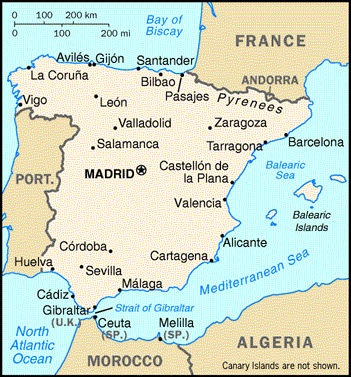
Widening the Access to HIV Testing: The Contribution of Three In-Pharmacy Testing Programmes in Spain

Below:  Distribution of the participating pharmacies on three rapid HIV testing programmes


45.7% were heterosexual men (MSW), 14.4% men who have sex with men (MSM), and 27% women. The 35% were younger than 30 and 9.6% foreigners. The 52% were previously untested, and women were the most likely to be untested. The three programmes altogether diagnosed 226 people, resulting in a global prevalence of 0.9% (95%CI: 0.8–1.1); 3.4% in MSM (95%CI: 2.8–4.0). The prevalence among Spaniards was 0.8% (0.7–1.0) vs. 2.2 (1.6–2.9) among foreigners. The percentages of MSM diagnosed by all three programmes were higher than the one reported by their respective RHSS. Thirty four percent of the reactive MSM and the 71.4% of the reactive MSW did not have a previous HIV test although big testing history differences were observed across the programmes. Altogether, these services contributed with the 10.6% of all HIV diagnoses in these regions.

In-pharmacy HIV testing programmes are a valuable testing option, having been able to uncover 1 out of 10 the new diagnoses reported in each region. They showed a good capacity of reaching and diagnosing previously untested populations, not only a priority population such as MSM but also heterosexual population who are more affected by delayed diagnosis. They seem to be particularly suitable for regions without large cities and specific HIV diagnostic services.

Read more at:  http://goo.gl/FRasOq MT @PLOSONE