More and via: http://goo.gl/uE1k8Y
Showing posts with label Police Victimization. Show all posts
Sunday, March 27, 2016
Sunday, March 20, 2016
Social Movements Against Racist Police Brutality and Department of Justice Intervention in Prince George's County, Maryland
Racist police brutality has
been systemic in Prince George's County, Maryland. The victims include African
Americans, the mentally challenged, and immigrant populations, creating a
complex and uneven public health impact. Three threads characterize the social
movements and intervention since 1970.
First, a significant demographic shift occurred as African Americans became the majority population in the late 1980s when the first Black county executive was elected in 1994. Despite the change in political leadership, police brutality remained rampant. Lower-income households located close to the District of Columbia and "inside the beltway" experienced the most police brutality.
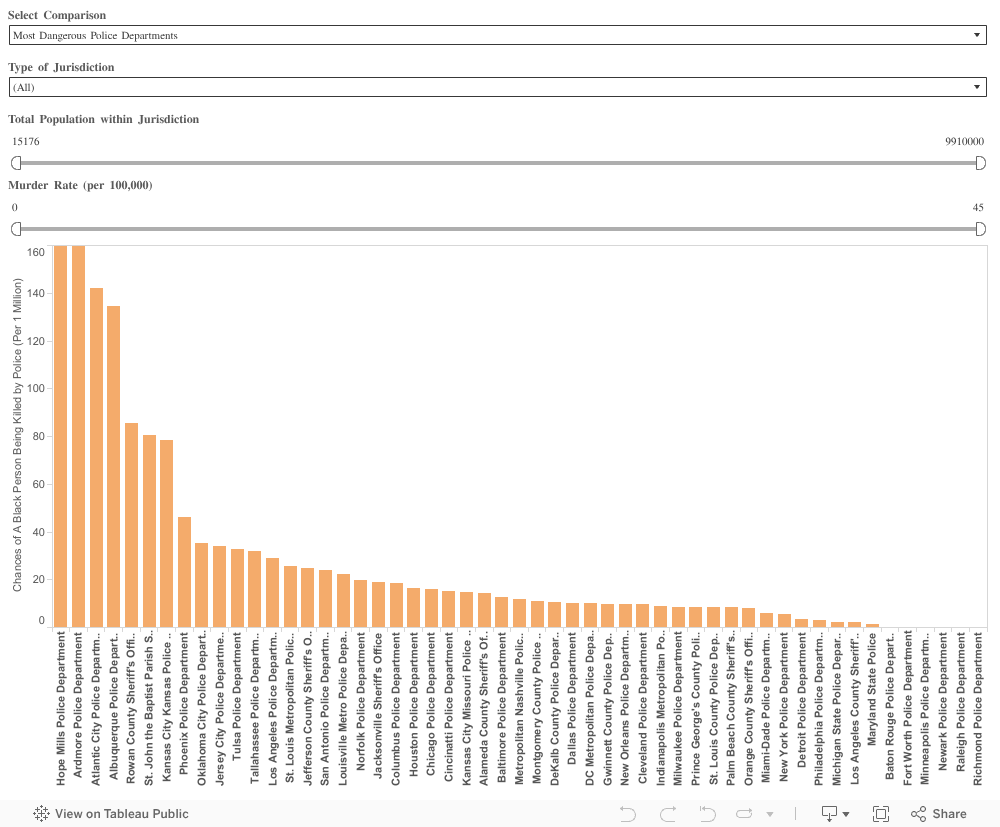
In 2001, The Washington Post revealed that between 1990 and 2000, Prince George's police shot and killed more citizens per officer than any of the 50 largest city and county law enforcement agencies in the country, 84 % of whom were black. Of the 147 persons shot during the 1990s, 12 were mentally and/or emotionally disturbed; 6 of these shootings were fatal.
Second, resistance to police brutality emerged in a variety of political formations throughout the period, especially in the late 1990s. Sustained community pressure prompted the Department of Justice (DOJ) to open a civil rights investigation of the police department in November 2000. To avoid a potential federal lawsuit, the county leadership negotiated a memorandum of agreement (MOA) with the DOJ to enact policy reforms, part of which called for supplementing the departmental mobile crisis team, comprised of mental health care professionals, to respond to all cases involving mentally challenged citizens.
Third, the incomplete process of change subsequent to the ending of DOJ oversight suggests a continued challenge to social movements opposing police brutality. This study focuses on the effectiveness of the MOA along with the activism of the People's Coalition for Police Accountability (PCPA) in reforming a culture of police brutality. The intensive oversight by the DOJ, combined with engaged resident activism, reduced the incidences of police brutality during the period 2004-2013.
Since the termination of DOJ oversight, disturbing developments suggest the need for continued and sustained activism. Since 2010, county police officers have fatally shot 21 people, several in questionable circumstances.
At the same time, the Prince George's Police Department has received more tactical military weaponry than any other jurisdiction in the state of Maryland under the 1033 program of the National Defense Authorization Act.
First, a significant demographic shift occurred as African Americans became the majority population in the late 1980s when the first Black county executive was elected in 1994. Despite the change in political leadership, police brutality remained rampant. Lower-income households located close to the District of Columbia and "inside the beltway" experienced the most police brutality.
In 2001, The Washington Post revealed that between 1990 and 2000, Prince George's police shot and killed more citizens per officer than any of the 50 largest city and county law enforcement agencies in the country, 84 % of whom were black. Of the 147 persons shot during the 1990s, 12 were mentally and/or emotionally disturbed; 6 of these shootings were fatal.
Second, resistance to police brutality emerged in a variety of political formations throughout the period, especially in the late 1990s. Sustained community pressure prompted the Department of Justice (DOJ) to open a civil rights investigation of the police department in November 2000. To avoid a potential federal lawsuit, the county leadership negotiated a memorandum of agreement (MOA) with the DOJ to enact policy reforms, part of which called for supplementing the departmental mobile crisis team, comprised of mental health care professionals, to respond to all cases involving mentally challenged citizens.
Third, the incomplete process of change subsequent to the ending of DOJ oversight suggests a continued challenge to social movements opposing police brutality. This study focuses on the effectiveness of the MOA along with the activism of the People's Coalition for Police Accountability (PCPA) in reforming a culture of police brutality. The intensive oversight by the DOJ, combined with engaged resident activism, reduced the incidences of police brutality during the period 2004-2013.
Since the termination of DOJ oversight, disturbing developments suggest the need for continued and sustained activism. Since 2010, county police officers have fatally shot 21 people, several in questionable circumstances.
At the same time, the Prince George's Police Department has received more tactical military weaponry than any other jurisdiction in the state of Maryland under the 1033 program of the National Defense Authorization Act.
Purchase full article at: http://goo.gl/8xSskR
By: Hutto JW Sr1, Green RD2.
- 1Howard University, Washington, DC, USA.
- 2Howard University, Washington, DC, USA. rgreen@howard.edu.
- J Urban Health. 2016 Feb 16.
More at: https://twitter.com/hiv insight
Thursday, March 10, 2016
Building on the Evidence: Guiding Policy and Research on Police Encounters with Persons with Mental Illnesses
...During this time of national concern about excessive use of
force by police, a range of stakeholders—including communities, federal and
state governments, and law enforcement—seek improvements in community
partnership, accountability, transparency, and skillful restraint to begin
reversing the problems of excessive police use of force, including as they
affect persons with mental illnesses. Prevention-oriented policies and programs
that offer tools for improving de-escalation of potentially dangerous
encounters with persons in a mental-health crisis could help minimize risk for
injury during police encounters for all parties involved and reduce the
likelihood that force will be needed at all. As an example, a recent trend in
state law making broadens police authority to remove guns from persons who are
considered to be in danger of harming themselves or others but who have not committed
a criminal act and are not prohibited from gun ownership. Connecticut, Indiana,
and California are three states with different versions of a law in place to
remove guns from potentially dangerous persons. A benefit of this policy
approach to managing potential dangerousness among persons in crisis is in
removing the focus from mental illnesses per se and placing it instead on
demonstrated behaviors by any member of the community that suggest heightened
risk. This conceptual and operational shift in focus from mental illnesses to
dangerousness is important for reducing stigma around mental illnesses, both in
the community and among law enforcement officers.
There has also been increased awareness in law
enforcement communities of the need for more in-depth officer training in
de-escalation. The New York Times reported
on a recent survey conducted by the Police Executive Research Forum (PERF) that
highlighted the tradition of a disproportionate focus on training in use of
force rather than de-escalation techniques and estimated the following median
number of hours spent in various training areas: firearms = 58 hours, defensive
tactics = 49 hours, de-escalation = 8 hours, and crisis intervention = 8 hours (Apuzzo,
2015). PERF asserted that some large police departments support the
idea of a new approach to training that focuses more heavily on teaching
officers the necessary skills to defuse tense situations and avoid violent
confrontations; but other departments are resistant. Persons with mental
illnesses would undoubtedly benefit during their encounters with police who had
more comprehensive training in de-escalation and potentially reduce their
chances not only of injury during those encounters but also of being subject to
police use of force at all.
Certain jurisdictions have had strong success in
implementing prevention-oriented models that include specialized officer
response to persons with mental illnesses like CIT. Other successful additions
to the community infrastructure provide officers with an alternative to taking
a person in crisis to the emergency department or jail. San Antonio, Texas,
paired CIT training with a newly constructed Restoration Center, a facility
with a 16-bed psychiatric unit, a medical clinic, and a “sobering room” where
police can drop off people who are intoxicated rather than taking them to jail.
The city reports related savings for the police department of $600,000 a year
in overtime pay alone; undoubtedly, many encounters that would have involved
use offorce and possible injury were averted.
Morabito
and Socia (2015) also call for policy improvements in
consistency, quality, and availability of data on encounters during which
police use force and the surrounding circumstances, including measures that
thoroughly describe the circumstances of a person’s mental-health crisis. While
a range of community and government stakeholders are engaged, now is an
especially important time to develop and institute progressive policies in an
effort to increase accountability for what takes place during police
encounters. New policies that require detailed reporting of police use-of-force
incidents would also facilitate further rigorous research on the effectiveness
of CIT, preemptive gun seizure laws, and other approaches to mitigating
dangerousness in encounters with persons in mental-health crisis. To ensure
that new reporting policies are sustainable, however, jurisdictions would need
to give careful consideration to issues around their implementation. Challenges
to be addressed include the acceptability of such policies among police
department leadership and their officers, as well as the feasibility of
additional reporting and paperwork for officers and data management for
administration.
Morabito
and Socia (2015) offer salient new evidence about risk
for injury during police encounters involving persons with mental illnesses in
which force is used. Their study lays a foundation for further research that
should extend to include non-CIT police officers to learn more about both
CIT-specific outcomes and any unobserved elevated risk for injury during police
encounters with persons with mental illnesses. Policy response to these
concerns can begin now, starting with improved reporting on police encounters
with persons with mental illnesses and a rigorous focus on building officers’
skills in de-escalation...
Full article at: http://goo.gl/DaHZ0u
By: Allison G. Robertson,
Direct correspondence to Allison G. Robertson, Department of
Psychiatry & Behavioral Sciences, Duke University School of Medicine,
Brightleaf Square, Ste 23B, Durham, NC 27701 (Email: allison.gilbert@duke.edu).
Allison G. Robertson is
an assistant professor in the Department of Psychiatry and Behavioral Sciences
at Duke University School of Medicine. She received a Ph.D. in health policy
and management from the University of North Carolina—Chapel Hill and an MPH in
health management and policy from the University of Michigan at Ann Arbor.
Professor Robertson conducts mental health law, policy, and services research,
with a particular focus on the problem of criminal justice involvement among
adults with serious mental illnesses. She is currently the principal
investigator on a study of gender differences in a statewide jail-diversion
program, principal investigator on a study of medication-assisted treatment for
justice-involved adults with co-occurring mental health and substance use
disorders, and an investigator on two multisite studies on gun control laws,
mental illness, and prevention of violence.
Wednesday, February 24, 2016
Police Decision-Making in the Gray Zone: The Dynamics of Police–Citizen Encounters with Mentally Ill Persons
Research finds mentally ill
persons have higher rates of police contacts, arrests, and criminal charges for
minor offenses and noncriminal behavior. It remains unclear whether the
decision-making process and factors affecting discretion reflect a procedural
bias that criminalizes the mentally ill.
Using observational data from a
Canadian police service, the findings suggest higher odds for criminal charges
with serious offenses, males, older citizens, a prior criminal record, being
under the influence of alcohol or drugs, and being uncooperative with requests
for information and compliance. The odds of a citation are higher for proactive
calls, more serious offenses, older citizens, mentally ill persons, those under
the influence, or with a disrespectful demeanor.
The overall findings suggest
an indirect procedural bias exists due to situational constraints, a
disjuncture between policy and police culture, and limited mental health
resources that lead to response strategies that contribute to criminalization
of the mentally ill.
Purchase full article at: http://goo.gl/FxjUY6
Jennifer
L. Schulenberg, Department of Sociology and Legal Studies, University of
Waterloo, Waterloo, ON, N2L 3G1, Canada; e-mail: jlschule@uwaterloo.ca.
More at: https://twitter.com/hiv insight
Tuesday, January 26, 2016
Deaths Resulting from the Use of Firearms by Police Against Motor Vehicles: Study of Cases in Porto, Portugal
Highlights
- Bullets that struck the occupants were FMJ type and exhibited a deformed structure but no significant loss of mass.
- Entry holes in the victim's body were larger than the calibre of bullets.
- Death occurred immediately after the victim was shot only in one case, despite a vital structure has been hit in all cases.
The firearms used were 7.65 mm (n = 1) or 9 mm
(n = 3) calibre semi-automatic pistols and 9 mm calibre
submachine guns (n = 2); the bullets were full metal jacket type. The
metal jacket of the collected projectiles was totally or partially destroyed in
3 cases. It exhibited a deformed structure in all cases. The trajectories of
the bullets in the vehicles were always more or less linear, even when initial
impact was at an oblique angle. The entry holes in the victims' bodies were
larger or much larger in size than the calibre of the bullets. They were
located, with the exception of one of the cases, in the left half of the body.
The trajectories in the victims' bodies were from front to back, in one case,
and from back to front in all others. Exit wounds were only found in two cases.
Death occurred immediately after the victim was shot only in one case, despite
a vital structure has been hit in all cases.
The cases studied support the idea
that the use of firearms against vehicles with the sole intention of
immobilisation entails uncontrollable danger to the lives of the occupants, and
especially when done by police forces not specifically trained for that
purpose. Therefore, such use of firearms should be avoided.
Purchase full article at: http://goo.gl/6YegLZ
By: Rodrigues E1, Faria P2, Santos A3, Fraga S4.
- 1Faculty of Medicine of Porto University, Department of Legal Medicine and Forensic Sciences, Alameda Professor Hernâni Monteiro, 4200-319, Porto, Portugal. Electronic address: ezrodrigues@gmail.com.
- 2Faculty of Law of Catholic University of Portugal, Rua Diogo Botelho, 1327, 4160-005, Porto, Portugal.
- 3National Institute of Legal Medicine and Forensic Sciences, Department of Pathology - North Branch, Jardim Carrilho Videira, 4050-167, Porto, Portugal; Faculty of Medicine of Porto University, Department of Legal Medicine and Forensic Sciences, Alameda Professor Hernâni Monteiro, 4200-319, Porto, Portugal; School of Health Sciences of Minho University, Campus Gualtar, 4710-057, Braga, Portugal; Center of Forensic Sciences, National Institute of Legal Medicine and Forensic Sciences, Largo da Sé Nova, 3000-213, Coimbra, Portugal.
- 4EPIUnit - Institute of Public Health, University of Porto, Rua das Taipas, 135, 4050-600, Porto, Portugal.
- J Forensic Leg Med. 2016 Jan 12;39:1-9. doi: 10.1016/j.jflm.2016.01.010.
More at: https://twitter.com/hiv insight
Wednesday, January 20, 2016
Black and Hispanic Men Perceived to Be Large Are at Increased Risk for Police Frisk, Search, and Force
Social justice issues remain
some of the most pressing problems in the United States. One aspect of social
justice involves the differential treatment of demographic groups in the
criminal justice system.
While data consistently show that Blacks and Hispanics
are often treated differently than Whites, one understudied aspect of these
disparities is how police officers' assessments of suspects' size affects their
decisions. Using over 3 million cases from the New York Police Department
(NYPD) Stop, Question, and Frisk (SQF) Database, 2006-2013, this study is the
first to explore suspects' race, perceived size, and police treatment.
Results
indicate that tall and heavy black and Hispanic men are at the greatest risk
for frisk or search. Tall and heavy suspects are at increased risk for
experiencing police force, with black and Hispanic men being more likely to
experience force than white men across size categories.
Below: The adjusted odds ratios for the suspect being frisked or
searched by race, height, and weight category compared to white suspects with
weight 141–204 pounds and 66–72” in height, controlling for stop
characteristics. The blue circle denotes white (W) suspects, the red diamond
denotes black (B) suspects, and the green square denotes Hispanic (H) suspects.
Error bars indicate the 99% confidence interval for the group estimates.
Below: The adjusted odds ratios for the suspect being frisked or
searched (top) or having force used on them (bottom) by race and BMI category
compared to normal weight white suspects, controlling for stop characteristics. The blue circle denotes white suspects, the red diamond
denotes black suspects, and the green square denotes Hispanic suspects. Error
bars indicate the 99% confidence interval for the group estimates.
Full article at: http://goo.gl/L48OrV
By: Milner AN1,2,3,4, George BJ2,5,6, Allison DB2,5,6.
- 1Department of Sociology, University of Alabama at Birmingham, Birmingham, AL 35294, United States of America.
- 2Nutrician Obesity Research Center, University of Alabama at Birmingham, Birmingham, AL 35294, United States of America.
- 3Minority Health and Health Disparities Research Center, University of Alabama at Birmingham, Birmingham, AL 35294, United States of America.
- 4Center for the Study of Community Health, University of Alabama at Birmingham, Birmingham, AL 35294, United States of America.
- 5School of Public Health, University of Alabama at Birmingham, Birmingham, AL 35294, United States of America.
- 6Office of Energetics, University of Alabama at Birmingham, Birmingham, AL 35294, United States of America
- PLoS One. 2016 Jan 19;11(1):e0147158. doi: 10.1371/journal.pone.0147158.
More at: https://twitter.com/hiv insight
Collateral Damage: The Health Effects of Invasive Police Encounters in New York City
The health effects of police
surveillance practices for the community at-large are unknown. Using microlevel
health data from the 2009-2012 New York City Community Health Survey (NYC-CHS)
nested within mesolevel data from the 2009-2012 NYC Stop, Question, and Frisk
(NYC-SQF) dataset, this study evaluates contextual and ethnoracially variant
associations between invasive aspects of pedestrian stops and multiple
dimensions of poor health.
Results reveal that living in neighborhoods where
pedestrian stops are more likely to become invasive is associated with worse
health. Living in neighborhoods where stops are more likely to result in
frisking show the most consistent negative associations. More limited
deleterious effects can be attributed to living in neighborhoods where stops
are more likely to involve use of force or in neighborhoods with larger
ethnoracial disparities in frisking or use of force.
However, the health
effects of pedestrian stops vary by ethnoracial group in complex ways. For
instance, minorities who live in neighborhoods with a wider ethno racial
disparity in police behavior have poorer health outcomes in most respects, but
blacks have lower odds of diabetes when they live in neighborhoods where they
face a higher risk that a stop will involve use of force by police than do
whites.
The findings suggest that the consequences of the institutionalization
of the carceral state are far-reaching.
Purchase full article at: http://goo.gl/tx2pYq
By: Sewell AA1,2, Jefferson KA3.
- 1Emory University, Atlanta, GA, USA. abigail.a.sewell@emory.edu (http://sociology.emory.edu/home/people/faculty/Abigail%20A.%20Sewell.html).
- 2University of Pennsylvania, Philadelphia, PA, USA. abigail.a.sewell@emory.edu.
- 3Emory University, Atlanta, GA, USA.
- J Urban Health. 2016 Jan 15.
More at: https://twitter.com/hiv insight
Monday, January 11, 2016
Thursday, December 31, 2015
Are Healthcare Professionals Working in Australia's Immigration Detention Centres Condoning Torture?
Australian immigration
detention centres are in secluded locations, some on offshore islands, and are
subject to extreme secrecy, comparable with 'black sites' elsewhere.
There are
parallels between healthcare professionals working in immigration detention
centres and healthcare professionals involved with or complicit in torture. In
both cases, healthcare professionals are conflicted between a duty of care to
improve the health of patients and the interests of the government. While this
duality of interests has been recognised previously, the full implications for
healthcare professionals working in immigration detention have not been
addressed.
The Australian Government maintains that immigration detention is
needed for security checks, but the average duration of immigration detention
has increased from 10 weeks to 14 months, and detainees are not informed of the
progress of their application for refugee status. Long-term immigration
detention causes major mental health problems, is illegal in international law
and arguably fulfils the recognised definition of torture.
It is generally
accepted that healthcare professionals should not participate in or condone
torture. Australian healthcare professionals thus face a major ethical dilemma:
patients in immigration detention have pressing mental and physical health
needs, but providing healthcare might support or represent complicity in a
practice that is unethical.
Individual healthcare professionals need to decide
whether or not to work in immigration detention centres. If they do so, they
need to decide for how long and to what extent restrictive contracts and
gagging laws will constrain them from advocating for closing detention centres.
Purchase full article at: http://goo.gl/fAyLXk
By: Isaacs D1.
- 1Department of Infectious Diseases & Microbiology, Children's Hospital at Westmead, Sydney, New South Wales, Australia Discipline of Child Health, University of Sydney, Sydney, New South Wales, Australia.
More at: https://twitter.com/hiv
insight
Monday, December 28, 2015
Wednesday, December 23, 2015
Stop, Question, and Complain: Citizen Grievances Against the NYPD and the Opacity of Police Stops Across New York City Precincts, 2007-2013
Data on police stops can be
examined to reflect on the relative "opacity" of these encounters and
how aggregate patterns on the nature-not just the volume-of reported stops
relate to public scrutiny of the police.
We hypothesize that public scrutiny on
police stops is positively related to the prevalence of opaque stop practices
across dimensions of "intrusiveness," "rationale," and
"setting" derived from agency records. We further argue that this
relationship is influenced by neighborhood conditions in the form of
concentrated disadvantage, residential instability, and heterogeneity.
To
develop these ideas, we draw on a publicly available NYPD dataset on police
stops to specify a series of fixed and random effects models that describe
variation in recorded stop practices across precincts (N = 74) and overtime
(T = 7, 2007-2013). We relate these practices to neighborhood conditions
derived from the Census and examine their association with rates of SQF
complaints to the CCRB.
Results show considerable variation in indicators of
opacity, particularly across precincts. More importantly, we also find that
rates of complaints are higher in precincts that have more vaguely defined,
intrusive stops.
Results also suggest that concentrated disadvantage is
independently and positively related with higher rates of public scrutiny of
the police.
Purchase full article at: http://goo.gl/n0myhu
By: Rengifo AF1, Fowler K2.
1School of Criminal Justice, Rutgers University, 123
Washington St, Suite 554, Newark, NJ, 07102, USA. arengifo@rutgers.edu.
2School of Criminal Justice, Rutgers University, 123
Washington St, Suite 554, Newark, NJ, 07102, USA. kurt.fowler@rutgers.edu.
More at: https://twitter.com/hiv_insight
Tuesday, December 22, 2015
Who Shot Ya? How Emergency Departments Can Collect Reliable Police Shooting Data
This paper examines an
alternative solution for collecting reliable police shooting data.
One
alternative is the collection of police shooting data from hospital trauma
units, specifically hospital-based violence intervention programs. These
programs are situated in Level I trauma units in many major cities in USA.
While the intent of these programs is to reduce the risk factors associated
with trauma recidivism among victims of violent injury, they also collect
reliable data on the number of individuals treated for gunshot wounds. While
most trauma units do a great job collecting data on mode of injury, many do not
collect data on the circumstances surrounding the injury, particularly
police-involved shootings.
Research protocol on firearm-related injury conducted
in emergency departments typically does not allow researchers to interview
victims of violent injury who are under arrest. Most victims of nonfatal
police-involved shootings are under arrest at the time they are treated by the
ED for their injury. Research protocol on victims of violent injury often
excludes individuals under arrest; they fall under the exclusion criteria when
recruiting potential participants for research on violence. Researchers working
in hospital emergency departments are prohibited from recruited individuals
under arrests. The trauma staff, particularly ED physicians and nurses, are in
a strategic position to collect this kind of data.
Thus, this paper examines
how trauma units can serve as an alternative in the reliable collection of
police shooting data.
Purchase full article at: http://goo.gl/xq9TVH
By: Richardson JB Jr1,2.
- 1Department of African-American Studies, College Park, MD, USA. jrichar5@umd.edu.
- 2Violence Intervention Research Project, Prince George's Hospital Trauma Center, Cheverly, MD, USA. jrichar5@umd.edu.
More at: https://twitter.com/hiv_insight
Tuesday, December 8, 2015
Police Killings and Police Deaths Are Public Health Data and Can Be Counted
Summary Points
- During the past year, the United States has experienced major controversies—and civil unrest—regarding the endemic problem of police violence and police deaths.
- Although deaths of police officers are well documented, no reliable official US data exist on the number of persons killed by the police, in part because of long-standing and well-documented resistance of police departments to making these data public.
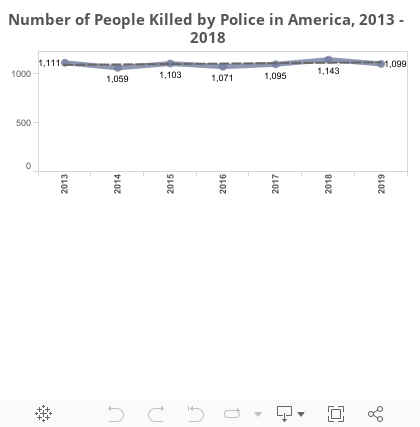
- These deaths, however, are countable, as evidenced by “The Counted,” a website launched on June 1, 2015, by the newspaper The Guardian, published in the United Kingdom, which quickly revealed that by June 9, 2015, over 500 people in the US had been killed by the police since January 1, 2015, twice what would be expected based on estimates from the US Federal Bureau of Intelligence (FBI).
- Law-enforcement–related deaths, of both persons killed by law enforcement agents and also law enforcement agents killed in the line of duty, are a public health concern, not solely a criminal justice concern, since these events involve mortality and affect the well-being of the families and communities of the deceased; therefore, law-enforcement–related deaths are public health data, not solely criminal justice data.
- We propose that law-enforcement–related deaths be treated as a notifiable condition, which would allow public health departments to report these data in real-time, at the local as well as national level, thereby providing data needed to understand and prevent the problem.
Below: US deaths due to legal intervention: national and city-specific annual 5-year moving average rate (per 100,000) among US black men and white men ages 15–34, 1960–2011
Full article at: http://goo.gl/xgEpZl
By: Nancy Krieger, Jarvis T. Chen, Pamela D. Waterman, Mathew V. Kiang, Justin Feldman
More at: https://twitter.com/hiv_insight
Saturday, October 31, 2015
The Role of Visual Markers in Police Victimization among Structurally Vulnerable Persons in Tijuana, Mexico
Law enforcement can shape HIV risk behaviours and undermine
strategies aimed at curbing HIV infection. Little is known about factors that
increase vulnerability to police victimization in Mexico. This study identifies
correlates of police or army victimization (i.e., harassment or assault) in the
past 6 months among patients seeking care at a free clinic in Tijuana,
Mexico.
From January to May 2013, 601 patients attending a
binational student-run free clinic completed an interviewer-administered
questionnaire. Eligible participants were: (1) ≥18 years old; (2) seeking care
at the clinic; and (3) spoke Spanish or English. Multivariate logistic
regression analyses identified factors associated with police/army
victimization in the past 6 months.
More than one-third (38%) of participants reported
victimization by police/army officials in the past 6 months in Tijuana. In
multivariate logistic regression analyses, males, tattooed persons and
those who injected drugs in the past 6 months were significantly more likely to report past 6-month police/army
victimization. Recent feelings of rejection and
being denied employment were also independently
associated with police/army victimization.
Structural interventions aimed at reducing stigma against
vulnerable populations and increasing social incorporation may aid in reducing
victimization events by police/army in Tijuana. Police education and training to reduce
abusive policing practices may be warranted.
Purchase full article
at: http://goo.gl/z0bf3A
By: Pinedo M1, Burgos JL1, Ojeda AV2, FitzGerald D3, Ojeda VD4.
- 1Division of Global Public Health, Department of Medicine, University of California, San Diego, Institute of the Americas, 10111 North Torrey Pines Road, Mail Code 0507, La Jolla, CA 92093, United States.
- 2Facultad de Medicina y Psicología, Universidad Autónoma de Baja California, Calzada Universidad #14418, Parque Industrial Internacional, Tijuana, Baja California C.P. 22390, Mexico.
- 3Center for Comparative Immigration Studies, University of California, San Diego, La Jolla, CA 92093-0548, United States.
- 4Division of Global Public Health, Department of Medicine, University of California, San Diego, Institute of the Americas, 10111 North Torrey Pines Road, Mail Code 0507, La Jolla, CA 92093, United States. Electronic address: vojeda@ucsd.edu.
More at: https://twitter.com/hiv_insight
Tuesday, September 29, 2015
Police Victimization among Persons Who Inject Drugs Along the U.S.-Mexico Border
Problematic policing practices are an important driver of
HIV infection among persons who inject drugs (PWID) in the U.S.-Mexico border
region. This study identifies factors associated with recent (i.e., past 6
months) police victimization (e.g., extortion, physical and sexual violence) in
the border city of Tijuana, Mexico.
From 2011 to 2013, 733 PWID (62% male) were recruited in
Tijuana and completed a structured questionnaire. Eligible participants were
age 18 years or older, injected illicit drugs within the past month, and spoke
Spanish or English. Multivariable logistic regression analyses identified
correlates of recent experiences of police victimization (e.g., bribes,
unlawful confiscation, physical and sexual violence).
Overall, 56% of PWID reported a recent police victimization
experience in Tijuana.
- In multivariable logistic regression analyses, factors independently associated with recent police victimization included
- recent injection of methamphetamine
- and recently received injection assistance by a "hit doctor".
Physical drug using markers may increase PWID susceptibility
to police targeting and contribute to experiences of victimization.
Interventions aimed at reducing police victimization events in the U.S.-Mexico
border region should consider PWID's drug-using behaviors. Reducing problematic
policing practices may be a crucial public health strategy to reduce HIV risk
among PWID in this region
Via: http://ht.ly/SPrnU Purchase
full article at: http://ht.ly/SPrpO
- 1Alcohol Research Group, University of California, Berkeley, California.
- 2Division of Global Public Health, Department of Medicine, University of California, San Diego, California.
- 3School of Social Work, San Diego State University, San Diego, California.
- 4Department of Anthropology, San Diego State University, San Diego, California.
- 5School of Public Health, San Diego State University, San Diego, California.
More at: https://twitter.com/hiv_insight
Subscribe to:
Posts (Atom)