Showing posts with label pharmacy. Show all posts

Sunday, March 6, 2016

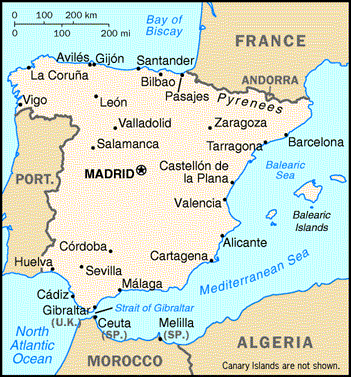
The Rapid HIV Test in Spanish Pharmacies: A Novel Program to Reach Heterosexual Men?

OBJECTIVES:
Spain has been a pioneer in the implementation of rapid HIV testing programmes in pharmacies to increase access to testing. However, no formal evaluation of the effectiveness of these programmes has been carried out to date. Our aim was to evaluate the ability of a novel in-pharmacy rapid HIV testing programme to promote diagnosis and reach vulnerable populations.

METHODS:
Between 2011 and 2012, 2168 people underwent testing in 16 urban pharmacies in 10 cities of a Spanish region with a low prevalence of HIV infection. The main outcomes of the programme were compared with those of the regional surveillance system for new HIV diagnoses (RHSS-CyL).

RESULTS:
Overall, 52.8% of those tested were heterosexual men, 15.8% were men who have sex with men (MSM) and 25.3% were women. Nine per cent were immigrants and 41.9% were < 30 years old. In total, 59.5% of the heterosexual men, 44.6% of the MSM and 65.3% of the women were previously untested. There were 23 positive results, representing 6% of all new regional diagnoses in 2011. The global prevalence was 1.1% (95% confidence interval 0.6-1.5%) and the prevalence in MSM was 3.8%. Of the reactive results, 60.9% were in MSM, 34.8% in heterosexual men and only 4.3% in women, vs. 35.4%, 37.5% and 15.0%, respectively, reported by the RHSS-CyL. The mean age of those testing positive was 32.7 years vs. 38.7 years in the RHSS-CyL. Fifty per cent of MSM and 75% of heterosexual men testing positive were previously untested.

CONCLUSIONS:
In Spain, this is the first programme not targeted at the most at-risk populations, and has been shown to be effective in reaching and diagnosing heterosexual men, who are the group most affected by delayed diagnoses. Heterosexual men accounted for over half of those tested and a third of those diagnosed, and most of them were previously untested. Young and previously untested MSM also greatly benefitted from the programme.

Purchase full article at:   http://goo.gl/zxwJFT

  • 1National Epidemiology Centre, Carlos III Health Institute, Madrid, Spain.
  • 2CIBER of Epidemiology and Public Health (CIBERESP), Madrid, Spain.
  • 3Epidemiological Surveillance Service, Public Health Directorate, Regional Ministry of Health of Castilla and León, Valladolid, Spain.
  • 4National School of Health, Carlos III Health Institute, Madrid, Spain. 
  •  2015 Jul;16(6):362-9. doi: 10.1111/hiv.12224. Epub 2015 Feb 17.


Friday, March 4, 2016

Community Pharmacists' Experiences in Mental Illness & Addictions Care: A Qualitative Study

BACKGROUND:
Community pharmacists are accessible health care professionals who encounter people with lived experience of mental illness and addictions in daily practice. Although some existing research supports that community pharmacists' interventions result in improved patient mental health outcomes, gaps in knowledge regarding the pharmacists' experiences with service provision to this population remain. Improving knowledge regarding the pharmacists' experiences with mental illness and addictions service provision can facilitate a better understanding of their perspectives and be used to inform the development and implementation of interventions delivered by community pharmacists for people with lived experience of mental illness and addictions in communities.

METHODS:
We conducted a qualitative study using a directed content analysis and the Theoretical Domains Framework as part of our underlying theory of behaviour change and our analytic framework for theme development. The Theoretical Domains Framework facilitates understanding of behaviours of health care professionals and implementation challenges and opportunities for interventions in health care. Thematic analysis co-occurred throughout the process of the directed content analysis. We recruited community pharmacists, with experience dispensing psychotropics, at a minimum, through multiple mechanisms (e.g., professional associations) in a convenience sampling approach. Potential participants were offered the option of focus groups or interviews.

RESULTS:
Data were collected from one focus group and two interviews involving six pharmacists. Theoretical Domains Framework coding was primarily weighted in two domains: social/professional role and identity and environmental context and resources. We identified five main themes in the experiences of pharmacists in mental illness and addictions care: competing interests, demands, and time; relationships, rapport, and trust; stigma; collaboration and triage; and role expectations and clarity.

CONCLUSIONS:
Pharmacists are not practicing to their full scope of practice in mental illness and addictions care for several reasons including limitations within the work environment and lack of structures and processes in place to be fully engaged as health care professionals. More research and policy work are needed to examine better integration of pharmacists as members of the mental health care team in communities.

Below:  The Behaviour Change Wheel [47]. From Michie et al. [47]


Full article at:   http://goo.gl/X1l4Xh

  • 1College of Pharmacy, Dalhousie University, 5968 College St., PO Box 15000, Halifax, NS, B3H 4R2, Canada. andrea.murphy@dal.ca.
  • 2College of Pharmacy, Dalhousie University, 5968 College St., PO Box 15000, Halifax, NS, B3H 4R2, Canada. heather.phelan@dal.ca.
  • 3College of Pharmacy, Dalhousie University, 5968 College St., PO Box 15000, Halifax, NS, B3H 4R2, Canada. scott.haslam@dal.ca.
  • 4School of Nursing, Dalhousie University, 5869 University Ave., PO Box 15000, Halifax, NS, B3H 4R2, Canada. ruth.martin-misener@dal.ca.
  • 5Sun Life Financial Chair in Adolescent Mental Health, Dalhousie University/IWK Health Centre, 5850 University Ave., PO Box 9700, Halifax, NS, B3K 6R8, Canada. Stanley.kutcher@iwk.nshealth.ca.
  • 6Department of Psychiatry, Dalhousie University, QEII HSC, AJLB 7517, 5909 Veterans' Memorial Lane, Halifax, NS, B3H 2E2, Canada. david.gardner@dal.ca.
  •  2016 Jan 28;11(1):6. doi: 10.1186/s13011-016-0050-9. 


Sunday, February 28, 2016

‘What Is Known About Community Pharmacy Supply of Naloxone’: A Scoping Review

Highlights
  • Take-home naloxone may be expanded through community pharmacy.
  • Early work indicates pharmacists are willing to supply naloxone.
  • Existing models for community pharmacy of naloxone supply exist.
  • Supply models have important cost implications for consumers.
  • Larger implementation studies are needed to determine effectiveness.
Abstract
Background
There is growing evidence that expanded supply of take-home naloxone to prevent opioid overdose deaths is needed. Potential routes for expansion of naloxone provision include through community pharmacies. The aim of this scoping review is to establish what is known about community pharmacy supply of naloxone, in light of unique challenges and opportunities present in pharmacy settings.

Methods
A scoping review methodology was employed using the six stage iterative process advocated by Arksey and O’ Malley (2005) and Levac et al. (2010). Searches used key words and terms such as ‘naloxone’; ‘overdose prevention/drug overdose/opiate overdose’; ‘community/retail pharmacy’; ‘pharmacist/pharmacy/community pharmacy/pharmaceutical services’; ‘professional practice/role’; ‘community care’; attitude of health personnel’; ‘training/supply/cost’). Appropriate search terms were selected for each database. After initial exploratory searches, comprehensive searches were conducted with Cochrane Database of Systematic Reviews, Medline, Medline in Process, Embase, PsycINFO and CINAHL. Eligibility criteria centered on whether studies broadly described supply of naloxone in community pharmacy or had content relating to community pharmacy supply.

Results
The search identified 95 articles, of which 16 were related to pharmacy supply of naloxone. Five themes were presented after initial review of the data and consultation with the project Expert Group, and are; ‘Pharmacists Perceptions of Naloxone: Facilitators and Barriers’, ‘Patient Populations: Identification and Recruitment’, ‘Supply Systems and Cost’, ‘Legal Issues’, and ‘Training of Pharmacists and Community Pharmacy Naloxone Recipients’.

Conclusion
The community pharmacy based route for distribution of take home naloxone provision warrants further consideration and development. Existing strengths include a range of established supply models, and training curricula, few direct concerns regarding legal liability of pharmacists in the supply of naloxone (once legal supply systems have been established) and the wide range of potential identifiable patient populations, which include pain patients that may not be in contact with existing naloxone supply programmes.

Purchase full article at:   http://goo.gl/G49VMg

Affiliations

  • National Drug and Alcohol Research Centre, University of New South Wales, Australia
  • Drug and Alcohol Services, South Eastern Sydney Local Health District

Correspondence

  • Corresponding author.at: National Drug and Alcohol Research Centre University of New South Wales Sydney 2052, Australia.


Saturday, January 30, 2016

Community Pharmacy Services for People with Drug Problems Over Two Decades in Scotland: Implications for Future Development

BACKGROUND:
In Scotland community pharmacies are heavily involved in service delivery for people with drug problems (PWDP) as documented through surveys of all community pharmacies in 1995, 2000 and 2006. A further survey in 2014 enabled trends in service demand/provision to be analysed and provides insight into future development.

METHODS:
The lead pharmacist in every Scottish pharmacy (n=1246) was invited to complete a postal questionnaire covering attitudes towards PWDP and service provision and level of involvement in services (needle exchange, dispensing for PWDP and methadone supervision). Additional questions covered new services of take-home naloxone (THN) and pharmacist prescribing for opioid dependence. Telephone follow-up of non-responders covered key variables. A comparative analysis of four cross-sectional population surveys of the community pharmacy workforce (1995, 2000, 2006 and 2014) was undertaken.

RESULTS:
Completed questionnaires were returned by 709 (57%) pharmacists in 2014. Key variables (questionnaire or telephone follow-up) were available from 873 (70%). The proportion of pharmacies providing needle exchange significantly increased from 1995 to 2014 (8.6%, 9.5%, 12.2%, 17.8%) as did the proportion of pharmacies dispensing for the treatment of drug misuse (58.9%, 73.4%, 82.6% and 88%). Methadone was dispensed to 16,406 individuals and buprenorphine to 1777 individuals (increased from 12,400 and 192 respectively in 2006). Attitudes improved significantly from 1995 to 2014 (p<0.001). Being male and past training in drug misuse significantly predicted higher attitude scores (p<0.05) in all four years. Attitude score was a consistently significant predictor in all four years for dispensing for the treatment of drug misuse and providing needle exchange. In 2014, 53% of pharmacists felt part of the addiction team and 27.7% did not feel their role was valued by them. Nine pharmacists prescribed for opioid dependence.

CONCLUSION:
It is possible for pharmacy workforce attitudes and service engagement to improve over time. Training was key to these positive trends. Communication with the wider addiction team could be further developed.

Purchase full article at:   http://goo.gl/3enuWb

  • 1Centre of Academic Primary Care, Polwarth Building, University of Aberdeen, Foresterhill, Aberdeen AB25 2ZD, United Kingdom. Electronic address: c.i.math@abdn.ac.uk.
  • 2Institute of Applied Health Sciences, University of Aberdeen, Foresterhill, Aberdeen AB25 2ZD, United Kingdom.
  • 3Centre of Academic Primary Care, Polwarth Building, University of Aberdeen, Foresterhill, Aberdeen AB25 2ZD, United Kingdom. 


Friday, October 16, 2015

Effect of Legal Status of Pharmacy Syringe Sales on Syringe Purchases by Persons Who Inject Drugs in San Francisco & San Diego, CA

Sharing blood-contaminated syringes is the main risk factor for acquiring and transmitting blood-borne infections among persons who inject drugs (PWID). To reduce this risk, in 2005, California enacted legislation allowing local health jurisdictions to legalize non-prescription syringe sales after approving a disease prevention demonstration project (DPDP). With San Francisco approving a DPDP immediately and San Diego never approving one, we compared PWID across cities for their use of pharmacies PWID to obtain syringes.

PWID age 18-30 years old were recruited into separate studies in San Francisco (n=243) and San Diego (n=338) between 2008 and 2011. We used multivariable logistic regression to compare the proportions of PWID who obtained syringes from pharmacies by city while controlling for sociodemographics, injection practices and other risk behaviors.

Overall, most PWID were White (71%), male (63%), and between the ages of 18-25 years (55%). Compared to San Francisco, a smaller proportion of PWID in San Diego had bought syringes from pharmacies in the prior three months (16.9% vs. 49.8%; p<0.001), which remained statistically significant after adjusting for sociodemographic and behavioral factors (adjusted odds ratio=4.45, 95% confidence interval: 2.98, 6.65).

Use of pharmacies to obtain syringes was greater where it was legal to do so. Public health policy can influence HIV and hepatitis C associated risk among PWID; however, implementation of these policies is crucial for the benefits to be realized.

Purchase full article at: http://goo.gl/tNQIk0

  • 1Graduate School of Public Health, San Diego State University, San Diego, CA, USA.
  • 2Division of Global Public Health, School of Medicine, University of California San Diego, San Diego, CA, USA.
  • 3Department of Epidemiology and Biostatistics, University of California San Francisco, San Francisco, CA, USA.
  • 4Division of Global Public Health, School of Medicine, University of California San Diego, San Diego, CA, USA. Electronic address: rgarfein@ucsd.edu.  


Tuesday, October 6, 2015

Pharmacy Students’ Knowledge and Attitudes Regarding Medical Marijuana

To determine pharmacy students’ knowledge of and attitudes toward medical marijuana and to determine if pharmacy students need additional education on the topic.

Pharmacy students were asked to complete a survey on medical marijuana that assessed their knowledge of, medical uses of, adverse effects with, and attitudes toward medical marijuana through 23 Likert-scale questions.

Three hundred eleven students completed the survey. Fifty-eight percent of the students felt that medical marijuana should be legalized in all states. However, the majority of students did not feel comfortable answering consumers’ questions regarding efficacy, safety, or drug interactions related to the substance. Accurate responses for diseases or conditions for permitted medical marijuana use was low, with only cancer (91%) and glaucoma (57%) identified by more than half the students.

With an increasing number of states adopting medical marijuana use, pharmacy schools need to evaluate the adequacy of medical marijuana education in their curriculum.

Percentage of Pharmacy Students Identifying an Adverse Effect of Medical Marijuana
An external file that holds a picture, illustration, etc.
Object name is ajpe79685-t3.jpg

Pharmacy Students Opinions Towards Marijuana
An external file that holds a picture, illustration, etc.
Object name is ajpe79685-t4.jpg

Full article at: http://goo.gl/HuhPAu

By: Karen E. Moeller, PharmDcorresponding author and Barbara Woods, MA, RPh
Department of Pharmacy Practice, University of Kansas, 2010 Becker Dr., Lawrence, KS 66047. Tel: 913-588-5379. Fax: 913-588-2355. E-mail: ude.cmuk@relleomk


Thursday, September 24, 2015

Cost Analysis of a Novel HIV Rapid Testing Strategy in Community Pharmacies & Retail Clinics

To document the cost of implementing point-of-care (POC) human immunodeficiency virus (HIV) rapid testing in busy community pharmacies and retail clinics. Providing HIV testing services in community pharmacies and retail clinics is an innovative way to expand HIV testing. The cost of implementing POC HIV rapid testing in a busy retail environment needs to be documented to provide program and policy leaders with adequate information for planning and budgeting.

Cost analysis from a pilot project that provided confidential POC HIV rapid testing services in community pharmacies and retail clinics.

The pharmacy sites were operated under several different ownership structures (for-profit, nonprofit, sole proprietorship, corporation, public, and private) in urban and rural areas. We included data from the initial six sites that participated in the project. We collected the time spent by pharmacy and retail clinic staff for pretest and posttest counseling in an activity log for time-in-motion for each interaction.

The total cost was calculated to include costs of test kits, control kits, shipping, test supplies, training, reporting, program administration, and advertising.

The six sites trained 22 staff to implement HIV testing. 
  • A total of 939 HIV rapid tests were conducted over a median time of 12 months, of which 17 were reactive. 
  • Median pretest counseling time was 2 minutes. 
  • Median posttest counseling time was 2 minutes for clients with a nonreactive test and 10 minutes for clients with a reactive test. 
  • The average cost per person tested was an estimated $47.21. 
  • When we considered only recurrent costs, the average cost per person tested was $32.17.

Providing POC HIV rapid testing services required a modest amount of staff time and costs that are comparable to other services offered in these settings. 

HIV testing in pharmacies and retail clinics can provide an additional alternative venue for increasing the availability and accessibility of HIV testing services in the United States.

Via:  http://ht.ly/SDVTK  Purchase full article at: http://goo.gl/7ryXIo

  • 1Department of Infectious Diseases, Crosshouse University Hospital, Kilmarnock, UK.
  • 2Infectious Diseases Unit, La Paz University Hospital, Madrid, Spain.
  • 3Department of Internal Medicine, Puerta de Hierro Research Institute & University Hospital, Majadahonda, Madrid, Spain.
  • 4Department of Internal Medicine, La Luz Clinic, Madrid, Spain.