Showing posts with label Baltimore. Show all posts

Thursday, April 28, 2016

Viewing of Internet-Based Sexually Explicit Media as a Risk Factor for Condomless Anal Sex among Men Who Have Sex with Men in Four U.S. Cities

The last decade has seen a dramatic increase in the availability of sexually explicit media (SEM) on the Internet. Men who have sex with men (MSM) report near universal use of SEM. However, this widespread use of SEM among MSM may contribute to more condomless anal sex. 

To examine the association of viewing SEM on the Internet and the number of condomless anal sex encounters among MSM, in 2012, an online survey was conducted of 265 MSM from New York, Philadelphia, Baltimore, or Washington D.C. who reported viewing SEM online in the past 3 months. Analyses were performed using negative binomial regression. 

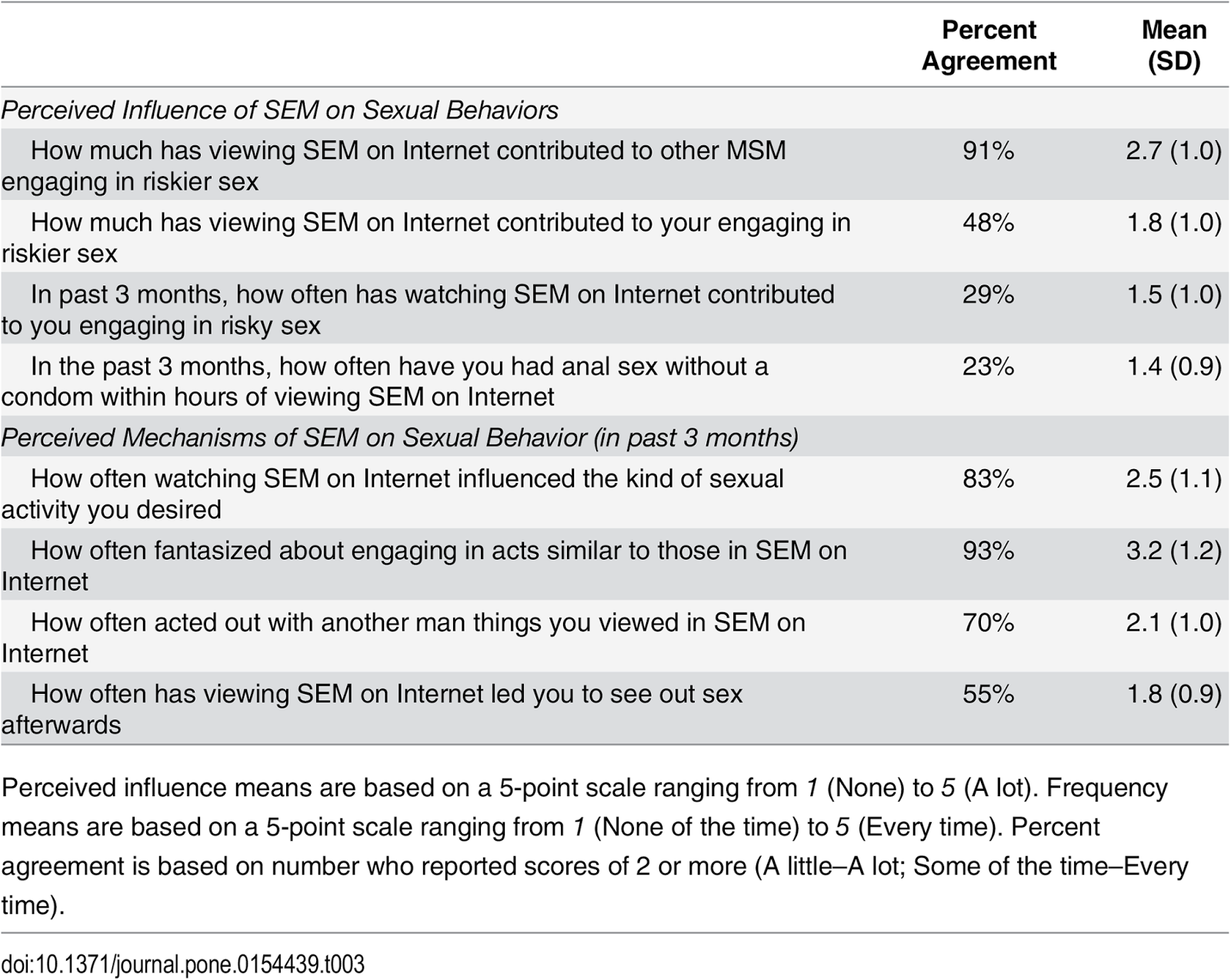
Nearly all men reported viewing SEM featuring anal sex with (91%) or without (92%) condoms in the past 3 months. Neither viewing more hours of SEM per week or compulsively viewing SEM were associated with more condomless anal sex encounters. Rather, viewing a greater proportion of SEM containing condomless anal sex was associated with engaging in more condomless anal encounters (IRR = 1.25), while viewing a greater proportion of SEM containing anal sex where condoms were used was associated with fewer condomless anal sex encounters (IRR = 0.62). MSM reported that viewing SEM caused changes in their sexual fantasies, desires, and behaviors. 

These findings provide important insights for health policy and the design of interventions addressing SEM and condomless sex among MSM. The findings suggest that condom use by SEM performers may benefit not only actor health, but also have health implications for SEM viewers.

Below:  Perceptions of the Influence of SEM (N = 265)


Full article at:   http://goo.gl/MNLVSE

By:
Eric W. Schrimshaw, Nadav Antebi-Gruszka
Department of Sociomedical Sciences, Mailman School of Public Health, Columbia University, New York, New York, United States of America

Martin J. Downing Jr.
Research and Evaluation, Public Health Solutions, Inc., New York, New York, United States of America


Monday, March 28, 2016

HIV Infection Itself May Not Be Associated with Subclinical Coronary Artery Disease among African Americans without Cardiovascular Symptoms

BACKGROUND:
The key objectives of this study were to examine whether HIV infection itself is associated with subclinical coronary atherosclerosis and the potential contributions of cocaine use and antiretroviral therapies (ARTs) to subclinical coronary artery disease (CAD) in HIV-infected persons.

METHODS AND RESULTS:
Between June 2004 and February 2015, 1429 African American (AA) adults with/without HIV infection in Baltimore, Maryland, were enrolled in an observational study of the effects of HIV infection, exposure to ART, and cocaine use on subclinical CAD. The prevalence of subclinical coronary atherosclerosis was 30.0% in HIV-uninfected and 33.7% in HIV-infected (P=0.17). Stratified analyses revealed that compared to HIV-uninfected, HIV-infected ART naïve were at significantly lower risk for subclinical coronary atherosclerosis, whereas HIV-infected long-term ART users (≥36 months) were at significantly higher risk. Thus, an overall nonsignificant association between subclinical coronary atherosclerosis and HIV was found. Furthermore, compared to those who were ART naïve, long-term ART users (≥36 months) were at significantly higher risk for subclinical coronary atherosclerosis in chronic cocaine users, but not in those who never used cocaine. Cocaine use was independently associated with subclinical coronary atherosclerosis.

CONCLUSIONS:
Overall, HIV infection, per se, was not associated with subclinical coronary atherosclerosis in this population. Cocaine use was prevalent in both HIV-infected and -uninfected individuals and itself was associated with subclinical disease. In addition, cocaine significantly elevated the risk for ART-associated subclinical coronary atherosclerosis. Treating cocaine addiction must be a high priority for managing HIV disease and preventing HIV/ART-associated subclinical and clinical CAD in individuals with HIV infection.

Below:  Prevalences of subclinical CAD by HIV serostatus


Below:  Unadjusted prevalence estimates of subclinical CAD by the 2013 ACC/AHA cardiovascular risk profile quintile


Below:  Associations between HIV infection and presence of coronary stenosis by duration of ART use


Full article at:   http://goo.gl/iwwLdK

  • 1Department of Radiology, Johns Hopkins School of Medicine, Baltimore, MD.
  • 2Department of Medicine, Johns Hopkins School of Medicine, Baltimore, MD.
  • 3Department of Epidemiology, Johns Hopkins Bloomberg School of Public Health, Baltimore, MD.
  • 4Department of Psychiatry, Johns Hopkins School of Medicine, Baltimore, MD.
  • 5Department of Pathology, Johns Hopkins School of Medicine, Baltimore, MD.
  • 6Department of Radiology, Johns Hopkins School of Medicine, Baltimore, MD Department of Medicine, Johns Hopkins School of Medicine, Baltimore, MD Department of Psychiatry, Johns Hopkins School of Medicine, Baltimore, MD Department of Pathology, Johns Hopkins School of Medicine, Baltimore, MD Department of Epidemiology, Johns Hopkins Bloomberg School of Public Health, Baltimore, MD slai@jhmi.edu. 
  •  2016 Mar 24;5(3). pii: e002529. doi: 10.1161/JAHA.115.002529.


Sunday, February 14, 2016

Sex with Sex Workers among Latino Day Laborers in Suburban Maryland

Using the structural-environmental conceptual framework, this study employed mixed methods to address the question of whether sex with female sex workers contributes to HIV risk among male immigrant Latino day laborers in suburban Maryland. Because contextual factors can greatly affect HIV risk for both sex workers and their clients, this study investigated the organizational structure of sex work, factors that predicted men’s hiring of sex workers, sexual behaviors performed with sex workers, and the use of condoms. 

Qualitative research was conducted to inform the development of a quantitative survey, but also provided crucial descriptions about the motivations, locations, arrangements, and sexual activities related to sex work. Key informant interviews (N= 10), in-depth interviews with day laborers (N= 10) and Latina female sex workers (N = 4), and two focus groups with day laborers (N= 11) were conducted, and a quantitative survey administered via Audio-enhanced Computer-assisted Self-interviewing (N = 174). 

Condom use was nearly universal in encounters with female sex workers, thus indicating that the sex workers were not an important source of HIV transmission in this context. Logistic regression was performed to test a model predicting sex with sex workers. Latino day laborers who reported more immigrant stress and who did not have a partner in the U.S. were more likely to have had sex with a sex worker, as were men who reported binge drinking. Structural and social conditions influenced the hiring of sex workers. 

Further research is warranted to better understand the interrelationships among these circumstances and to inform the development of programs to address them.

Experiences of Latino day laborers with sex workers
Percent
Ways men find sex workers (N= 174)
  Sex workers give out business cards59.2
  Friends tell each other50.6
  Pimp approaches potential clients33.3
  Internet18.4
  Sex workers are in public places (e.g., street corner)14.9
Locations where men have sex with sex workers (N= 174)
  House or apartment (“delivery”)58.1
  Brothel (“casa de sitas”)36.8
  Hotel or motel28.7
  Street, car, or park19.0
  Bar, discotheque, restaurant16.7
Reasons participants had sex with sex workers (N= 52)
  Lack of companionship65.4
  Relief from sexual urges55.8
  No commitment51.9
  Only sex available40.4
  Fun and pleasure36.5
  Distraction from problems17.3
Sexual behaviors participants performed with sex workers (N= 52)
  Vaginal intercourse76.9
  Oral sex on the participant59.6
  Manual stimulation of penis34.6
  Anal intercourse9.6
  Oral sex on the woman3.9
Note: Participants could select more than one response option

Full article at:   http://goo.gl/YzCU35

Department of Psychology, George Washington University, 2125 G St. NW, Washington, DC 20052, USA
corresponding authorCorresponding author.
Fernanda T. Bianchi: ude.uwg@ihcnaibf


Monday, February 1, 2016

Pre-Exposure Prophylaxis (PrEP) for Safer Conception among Serodifferent Couples: Findings from Healthcare Providers Serving Patients with HIV in Seven US Cities

Pre-exposure prophylaxis (PrEP) can reduce the risk of HIV transmission among serodifferent couples trying to conceive, yet provider knowledge, attitudes, and experience utilizing PrEP for this purpose are largely unexamined. 

Trained interviewers conducted phone interviews with healthcare providers treating patients with HIV in seven cities (Atlanta, Baltimore, Houston, Kansas City, Newark, Philadelphia, and San Francisco, N = 85 total). 

Quantitative and qualitative data were analyzed to describe experience, concerns, and perceived barriers to prescribing PrEP for safer conception. Providers (67.1% female, 43 mean years of age, 70.4% white, 10 mean years treating HIV+ patients, 56% in academic vs. community facilities, 62.2% MD) discussed both benefits and concerns of PrEP for safer conception among serodifferent couples. 

Only 18.8% of providers reported experience prescribing PrEP, 74.2% were willing to prescribe it under ideal circumstances, and 7.0% were not comfortable prescribing PrEP. Benefits included added protection and a greater sense of control for the HIV-negative partner. Concerns were categorized as clinical, system-level, cost, or behavioral. 

Significant differences in provider characteristics existed across sites, but experience with PrEP for safer conception did not, p = 0.14. Despite limited experience, most providers were open to recommending PrEP for safer conception as long as patients understood the range of concerns and could make informed decisions. 

Strategies to identify and link serodifferent couples to PrEP services and clinical guidance specific to PrEP for safer conception are needed.

Purchase full article at:   http://goo.gl/6wvGSj

  • 1 Department of Family Medicine, University of Kansas Medical Center , Kansas City, Kansas.
  • 2 Health Services and Outcomes Research, Children's Mercy Hospital , Kansas City, Missouri.
  • 3 François-Xavier Bagnoud Center, School of Nursing, Rutgers, The State University of New Jersey , Newark, New Jersey.
  • 4 Division of Infectious Diseases, Perelman Schools of Medicine, University of Pennsylvania , Philadelphia, Pennsylvania.
  • 5 Division of Infectious Diseases, Department of Pediatrics, Emory University School of Medicine , Atlanta, Georgia .
  • 6 HIVE, University of California San Francisco , San Francisco, California.
  • 7 Department of Obstetrics and Gynecology, Baylor College of Medicine , Houston, Texas.
  • 8 Department of Gynecology and Obstetrics, Johns Hopkins Medical Institutions , Baltimore, Maryland. 
  •  2016 Jan 29


Sunday, January 24, 2016

Context Matters: The Impact of Neighborhood Crime & Paranoid Symptoms on Psychosis Risk Assessment

Psychosis risk assessment measures probe for paranoid thinking, persecutory ideas of reference, and suspiciousness as part of a psychosis risk construct. However, in some cases, these symptoms may reflect a normative, realistic, and even adaptive response to environmental stressors rather than psychopathology. 

Neighborhood characteristics, dangerousness for instance, are linked to levels of fear and suspiciousness that can be theoretically unrelated to psychosis. Despite this potential confound, psychosis-risk assessments do not explicitly evaluate neighborhood factors that might (adaptively) increase suspiciousness. In such cases, interviewers run the risk of misinterpreting adaptive suspiciousness as a psychosis-risk symptom. Ultimately, the degree to which neighborhood factors contribute to psychosis-risk assessment remains unclear. 

The current study examined the relation between neighborhood crime and suspiciousness as measured by the SIPS among predominantly African American help-seeking adolescents (N=57) living in various neighborhoods in Baltimore City. Uniform Crime Reports, including violent and property crime for Baltimore City, were used to calculate a proxy of neighborhood crime. This crime index correlated with SIPS suspiciousness (r(55)=.32, p=.02). Multiple regression analyses demonstrated that increased neighborhood crime significantly predicted suspiciousness over and above the influence of the other SIPS positive symptoms in predicting suspiciousness. 

Findings suggest that neighborhood crime may in some cases account for suspiciousness ascertained as part of a psychosis risk assessment, and therefore sensitivity to contextual factors is important when evaluating risk for psychosis.

Purchase full article at:   http://goo.gl/bAbFvb

  • 1University of Maryland, Baltimore County, Department of Human Services Psychology (http://psychology.umd.edu/), 1000 Hilltop Circle, Baltimore, MD 21250, United States.
  • 2University of Maryland, School of Social Work, 525 W. Redwood St., Baltimore, MD 21201, United States.
  • 3Beth Israel Deaconess Medical Center, Department of Public Psychiatry, 75 Fenwood Road, 5th Floor, Boston, MA 02115, United States.
  • 4University of Maryland School of Medicine, 655 W. Baltimore St., Baltimore, MD 2120, United States.
  • 5University of Maryland, Baltimore County, Department of Human Services Psychology, 1000 Hilltop Circle, Baltimore, MD 21250, United States. Electronic address: jschiffma@umbc.edu. 
  •  2016 Jan 14. pii: S0920-9964(16)30007-X. doi: 10.1016/j.schres.2016.01.007.


Tuesday, January 5, 2016

Trends in Injection Drug Use among High School Students, U.S., 1995-2013

INTRODUCTION:
Injection drug use is the most frequently reported risk behavior among new cases of hepatitis C virus infection, and recent reports of increases in infection are of great concern in many communities. This study assessed the prevalence and trends in injection drug use among U.S. high school students.

METHODS:
Data were from CDC's Youth Risk Behavior Surveillance System, which collects information on health risk behaviors at the national, state, and large urban school district levels. Analyses were conducted in 2014.

RESULTS:
In 2013, 1.7% of high school students nationwide had ever injected any illegal drug. Nationwide, ever injecting any illegal drug did not change significantly from 1995 to 2013, except among black non-Hispanic students. For this subgroup, both a significant linear increase from 1995 to 2013 and a significant quadratic trend were observed, with injection drug use increasing from 1995 to 2009 and decreasing from 2009 to 2013. 
  • Significant linear increases in injection drug use occurred in five states (Arkansas, Hawaii, Maine, Maryland, and New York) and six large urban school districts (Baltimore, Memphis, Miami-Dade County, New York City, Philadelphia, and Seattle). 
  • Significant linear decreases occurred in three states (Massachusetts, South Dakota, and West Virginia). Both a significant linear increase and quadratic trend were observed in Maine; quadratic trends were observed in Tennessee, Utah, and Palm Beach County, Florida. 

CONCLUSIONS:
In some geographic areas and population groups, an increasing or high frequency of injection drug use was found among high school students, who should be targeted for prevention.

Purchase full article at:   http://goo.gl/ULDYwY

1Division of Viral Hepatitis, National Center for HIV/AIDS, Viral Hepatitis, STD, and TB Prevention, CDC, Atlanta, Georgia. Electronic address: rmk2@cdc.gov.
2Division of Adolescent and School Health, National Center for HIV/AIDS, Viral Hepatitis, STD, and TB Prevention, CDC, Atlanta, Georgia.
3Division of Viral Hepatitis, National Center for HIV/AIDS, Viral Hepatitis, STD, and TB Prevention, CDC, Atlanta, Georgia.
Am J Prev Med. 2016 Jan;50(1):40-6. doi: 10.1016/j.amepre.2015.05.026. Epub 2015 Aug 24.


Tuesday, December 8, 2015

Police Killings and Police Deaths Are Public Health Data and Can Be Counted

Summary Points 
  • During the past year, the United States has experienced major controversies—and civil unrest—regarding the endemic problem of police violence and police deaths.
  • Although deaths of police officers are well documented, no reliable official US data exist on the number of persons killed by the police, in part because of long-standing and well-documented resistance of police departments to making these data public.
  • These deaths, however, are countable, as evidenced by “The Counted,” a website launched on June 1, 2015, by the newspaper The Guardian, published in the United Kingdom, which quickly revealed that by June 9, 2015, over 500 people in the US had been killed by the police since January 1, 2015, twice what would be expected based on estimates from the US Federal Bureau of Intelligence (FBI).
  • Law-enforcement–related deaths, of both persons killed by law enforcement agents and also law enforcement agents killed in the line of duty, are a public health concern, not solely a criminal justice concern, since these events involve mortality and affect the well-being of the families and communities of the deceased; therefore, law-enforcement–related deaths are public health data, not solely criminal justice data.
  • We propose that law-enforcement–related deaths be treated as a notifiable condition, which would allow public health departments to report these data in real-time, at the local as well as national level, thereby providing data needed to understand and prevent the problem.


Below:  US deaths due to legal intervention: national and city-specific annual 5-year moving average rate (per 100,000) among US black men and white men ages 15–34, 1960–2011


Full article at:  http://goo.gl/xgEpZl

By:  Nancy Krieger, Jarvis T. Chen, Pamela D. Waterman, Mathew V. Kiang, Justin Feldman
Department of Social and Behavioral Sciences, Harvard T.H. Chan School of Public Health, Boston, Massachusetts, United States of America

Sunday, December 6, 2015

Improvements in the Continuum of HIV Care in an Inner-City Emergency Department

Objective: The Johns Hopkins Hospital Emergency Department has served as a window on the HIV epidemic for 25 years, and as a pioneer in emergency department-based screening/linkage-to-care (LTC) programs. We document changes in the burden of HIV and HIV care metrics to the evolving HIV epidemic in inner-city Baltimore.

Design/methods: We analyzed seven serosurveys conducted on 18 144 adult Johns Hopkins Hospital Emergency Department patients between 1987 and 2013 as well as our HIV-screening/LTC program (2007, 2013) for trends in HIV prevalence, cross-sectional annual incidence estimates, undiagnosed HIV, LTC, antiretrovirals treatment, and viral suppression.

Results: HIV prevalence in 1987 was 5.2%, peaked at more than 11% from 1992 to 2003 and declined to 5.6% in 2013. Seroprevalence was highest for black men (initial 8.0%, peak 20.0%, last 9.9%) and lowest for white women. Among HIV-positive individuals, proportion of undiagnosed infection was 77% in 1987, 28% in 1992, and 12% by 2013 (P < 0.001). Cross-sectional annual HIV incidence estimates declined from 2.28% in 2001 to 0.16% in 2013. Thirty-day LTC improved from 32% (2007) to 72% (2013). In 2013, 80% of HIV-positive individuals had antiretrovirals ARVs detected in sera, markedly increased from 2007 (27%) (P < 0.001). Proportion of HIV-positive individuals with viral suppression (<400 copies/ml) increased from 23% (2001) to 59% (2013) (P < 0.001).

Conclusion: Emergency department-based HIV testing has evolved from describing the local epidemic to a strategic interventional role, serving as a model for early HIV detection and LTC. Our contribution to community-based HIV-screening and LTC program parallels declines in undiagnosed HIV infection and incidence, and increases in antiretroviral use with associated viral suppression in the community.

Purchase full article at:  http://goo.gl/p8bgwO

By:  Kelen, Gabor D.a; Hsieh, Yu-Hsianga; Rothman, Richard E.a; Patel, Eshan U.b; Laeyendecker, Oliver B.b; Marzinke, Mark A.c,d; Clarke, Williamc; Parsons, Teresad; Manucci, Jordyn L.d; Quinn, Thomas C.b,d


Wednesday, November 25, 2015

Prevalence of and Risk Factors for Oral Human Papillomavirus Infection among HIV-Positive and HIV-Negative People Who Inject Drugs

Background
Human papillomavirus (HPV) causes most oropharyngeal cancers in the United States. Oral HPV prevalence is associated with immunosuppression, and drug use can be immunosuppressive, but the epidemiology of oral HPV among people who use drugs is not well described.

Methods
We enrolled men and women with a current or prior history of injection drug use in this cross-sectional sub-study within the AIDS Linked to the Intravenous Experience (ALIVE) cohort. We tested oral rinse samples for 37 types of HPV DNA and collected self-reported risk factor information. We compared oral HPV prevalence across categories using chi-squared statistics and multivariable logistic regression.

Results
Among 199 subjects, 32% were HIV-positive (median CD4 count 384 cells/μL), 90% were Black, 56% had less than a high school education, 17% had recently used injection drugs, and the median age was 54 years. Most had performed oral sex (82%) but had fewer than 5 lifetime partners (58%). The prevalence of any oral HPV was 29%, and of any oncogenic oral HPV was 13%. Oral HPV prevalence was high among both heterosexual men (30%) and women (20%). After adjustment, odds of oral HPV were increased among HIV-positive individuals with a low CD4 count (<350 cells/μl, aOR = 2.7, 95%CI = 1.2–6.4, vs. HIV-negative individuals), but not among HIV-positive individuals with a higher CD4 cell count. Odds were also elevated for those who had recently performed oral sex on a woman (aOR = 2.2, 95%CI = 1.01–4.6) and, even after this adjustment, among bisexual/lesbian females (aOR = 5.6, 95%CI = 1.4–23, vs. heterosexual females). Oral HPV prevalence was not associated with vaginal sex, performing oral sex on a man, or recent drug use.

Conclusions
Recent drug use was not associated with oral HPV prevalence in our study. However, despite modest numbers of sexual partners, the prevalence of oral HPV among this largely Black population with lower socioeconomic status was high.

Below:  Multivariable logistic model for oral HPV among 199 people who inject drugs in Baltimore City


Full article at:   http://goo.gl/UyggXU

By:
Hilary A. Robbins, Alicia Wentz, Gregory D. Kirk, Shruti H. Mehta, Gypsyamber D’Souza
Department of Epidemiology, Johns Hopkins Bloomberg School of Public Health, Baltimore, Maryland, United States of America

Christina E. Fennell
Spelman College, Atlanta, Georgia, United States of America

Maura Gillison, Weihong Xiao, Yingshi Guo
Ohio State University Comprehensive Cancer Center, Columbus, Ohio, United States of America
